
Pay-cycle view
TodayCash on hand
BillsBefore payday
PaydayExpected income
AfterRemaining cash
Bridge a specific number of days until the next paycheck without creating a worse post-payday shortfall.
Calculate the exact cash gap and cash remaining after repayment.
Start with amount and state. You can refine eligibility and repayment before any provider application.
Enter cash available, bills due and the next income event to calculate the shortfall instead of guessing the loan amount.
A three-day gap and a three-week gap often call for different solutions and repayment structures.
The planner shows the next-income balance after bills and a proposed repayment.
Changing a bill date, using earned wages, savings or another non-credit option may reduce the amount that needs financing.
Calculate cash on hand against bills due before payday.
A four-day gap and a fourteen-day gap can support very different routes.
Subtract repayment before calling the bridge affordable.
Show what remains for rent, food, utilities and other essentials.
Calculate only the shortfall before income.
A 3-day gap and a 20-day gap need different solutions.
Repayment should not create the next shortfall.
A bill-date change can be better than new debt.
The calculator is a planning estimate, not an offer. Change the amount, term, state or eligibility inputs and compare the result with the provider's actual disclosure.
Use these checks alongside the estimates above to compare timing, eligibility, total cost and repayment.
Illustrative comparison only; not an approval score or quoted rate.
FNB Elkhart Financial helps you compare options. The identified provider controls underwriting and the agreement.
Legal provider, service area and product type.
APR or fee structure, total repayment and any financed/upfront fee.
State availability, required evidence and inquiry method where applicable.
Disbursement rail, expected timing, due dates and authorization method.
Enter cash available, bills due and the next income event to calculate the shortfall instead of guessing the loan amount.
A three-day gap and a three-week gap often call for different solutions and repayment structures.
The planner shows the next-income balance after bills and a proposed repayment.
Amounts, approval, funding timing, credit-review method and fees can change by provider and location. Use the page tool to narrow the decision, then confirm the final contract terms.
Check legal provider identity, state availability, total repayment and payment authorization before submitting sensitive information.
Find your state regulator ↗Use total repayment and the due-date cash impact—not only the amount available—to decide whether a product fits. If repayment would require another loan, compare a different route or a non-credit alternative first.
Reviewed August 13, 2026. Estimates are for comparison; the identified provider controls final terms, approval and availability.
Responsible Lending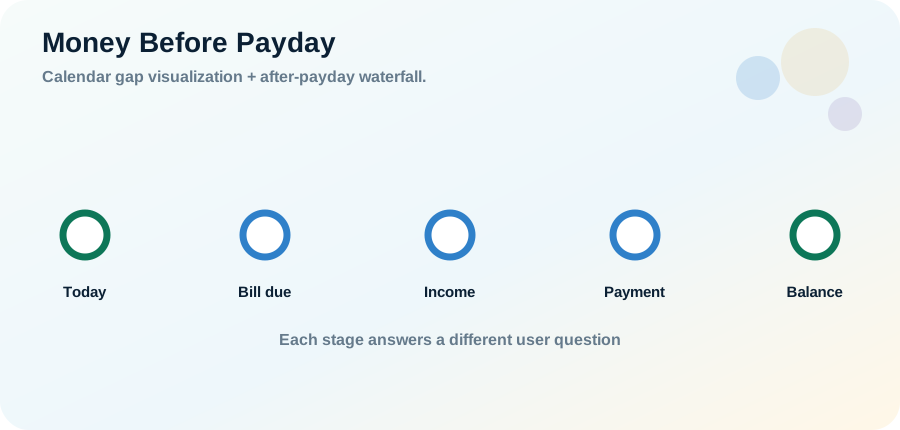
Our tools put timing, total repayment, state context and provider requirements next to the amount you are considering.
See payment, fees and repayment pressure—not only the amount available.
Where rules affect a product, state context is shown before the next step.
Assumptions, sources and review dates are separated from provider-specific terms.